Potential inputs
- Search queries and landing pages
- Clicks, impressions, CTR, and position
- Device, country, and date dimensions
- Verified property context
 PENNANT
Organic search integration
Connect search visibility, query, landing-page, click, and impression data to the broader enrollment marketing picture.
Available when approved Search Console property access and supported query, page, country, device, and date data fit the reporting scope.
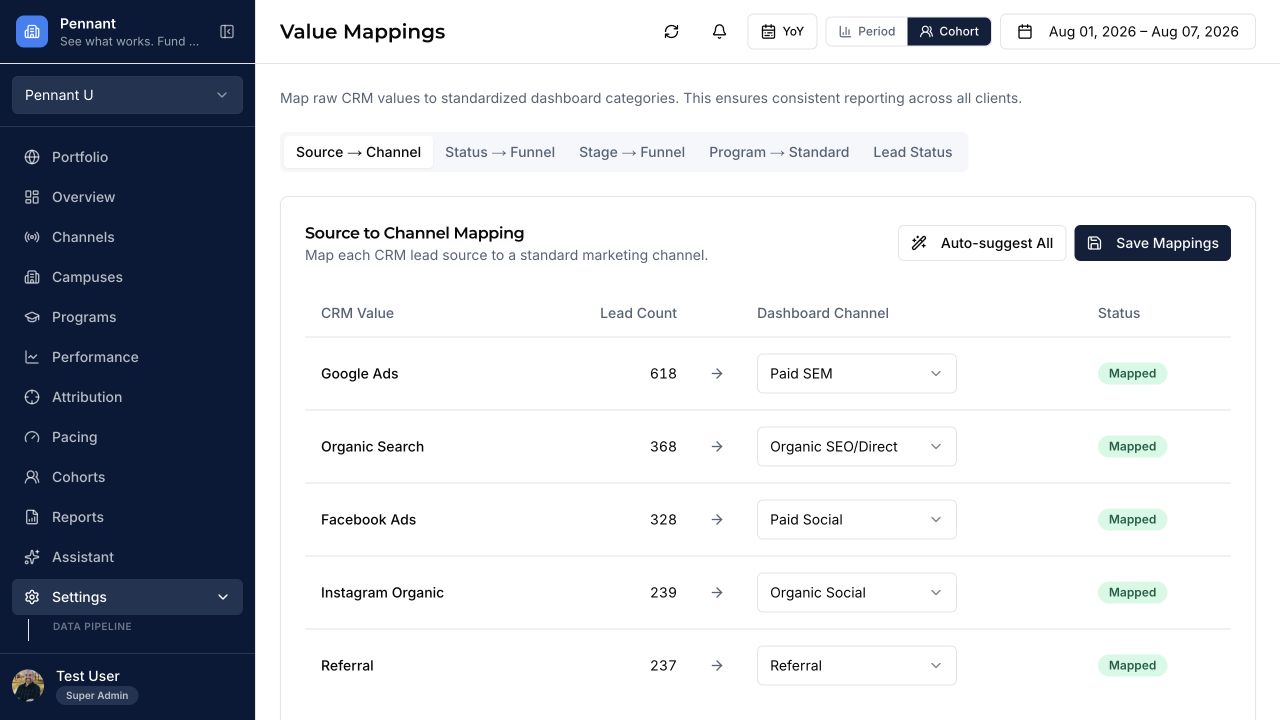
Source-specific reporting
Every implementation confirms access, definitions, historical depth, refresh cadence, and validation before the source becomes part of a decision view.
What to validate
Pennant preserves the distinction between platform signals, reporting inputs, and institution-confirmed enrollment outcomes.
Integration FAQ
Search Console is primarily an aggregate visibility source. Pennant can place query and landing-page trends beside CRM outcomes, but should not claim person-level attribution when the evidence does not support it.
The products use different collection methods, definitions, filters, time handling, and privacy rules. The variance is expected and should be interpreted rather than forced to match.
Learn more about source mapping and validation, data reconciliation, and Pennant security and data minimization.
Confirm the fit
Available capabilities depend on your configuration, permissions, data quality, and agreed implementation scope.
Book a demo