Minimize the data
Pennant is designed to analyze enrollment performance without requiring student names, email addresses, phone numbers, or street addresses.
 PENNANT
Security and privacy
Pennant uses the performance attributes needed to connect marketing activity with enrollment outcomes while minimizing sensitive student data.
Privacy by design
A useful enrollment view needs dates, statuses, sources, costs, organizational dimensions, and outcomes. It does not need to become another store of student contact information.
Pennant is designed to analyze enrollment performance without requiring student names, email addresses, phone numbers, or street addresses.
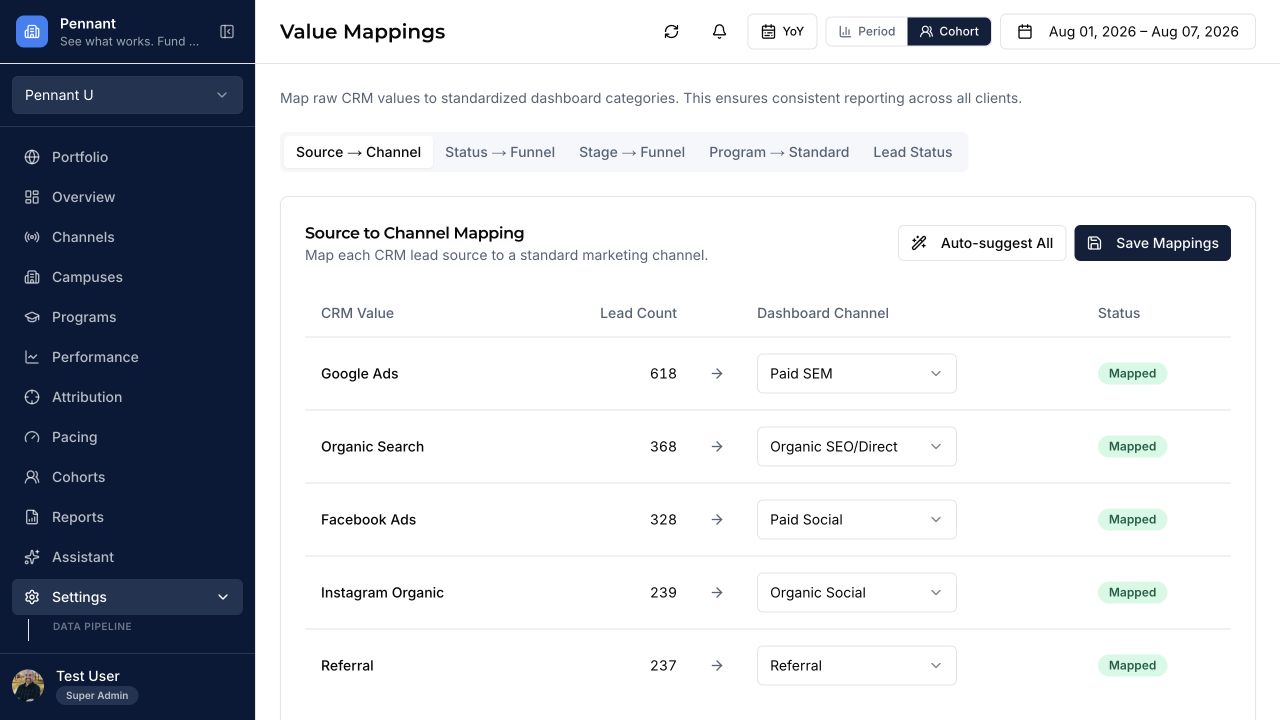
Source mappings and standardized reporting categories remain explicit so teams can review how the operating view is constructed.
Institutions retain responsibility for source access and definitions; Pennant documents, normalizes, and validates the agreed reporting inputs.
The data boundary
The final source design is confirmed during implementation based on your systems, governance requirements, and reporting goals.
Transparent normalization
Value mappings make the translation from CRM-specific language to standardized dashboard channels and stages reviewable.
Shared responsibility
Pennant and the institution agree on the minimum necessary sources, fields, access, validation process, and reporting scope before launch.
Start with your requirements
Bring your security, IT, CRM, and enrollment stakeholders into the implementation conversation.
Contact Pennant