 LeadSquared
Higher-ed fluent
Enrollment logic, terminology, and cycles are built in—not configured from scratch.
 PENNANT
Enrollment marketing intelligence for higher education
Pennant Signal connects marketing spend, CRM funnel, pacing, and enrollment outcomes in one trustworthy system—so your team can make better budget decisions while there is still time to act.
The problem
The spend lives in ad platforms. The funnel lives in the CRM. The agency report lands later. Pennant replaces the reporting scramble with one current, defensible view.
A guide who knows higher education
We know how difficult it is to connect marketing investment to enrollment outcomes across long cycles, multiple programs, and systems that were never designed to agree.
Pennant gives your team one trustworthy view of the full funnel, so you can make the next decision with confidence.
Enrollment logic, terminology, and cycles are built in—not configured from scratch.
Paid-channel costs use paid-source outcomes, so organic volume never flatters performance.
Useful enrollment intelligence without storing student names or contact information.
A simple plan
Keep the systems you already use. Pennant Signal connects them, translates them into enrollment language, and keeps the picture current.
Link your CRM, ad accounts, budgets, and reporting sources.
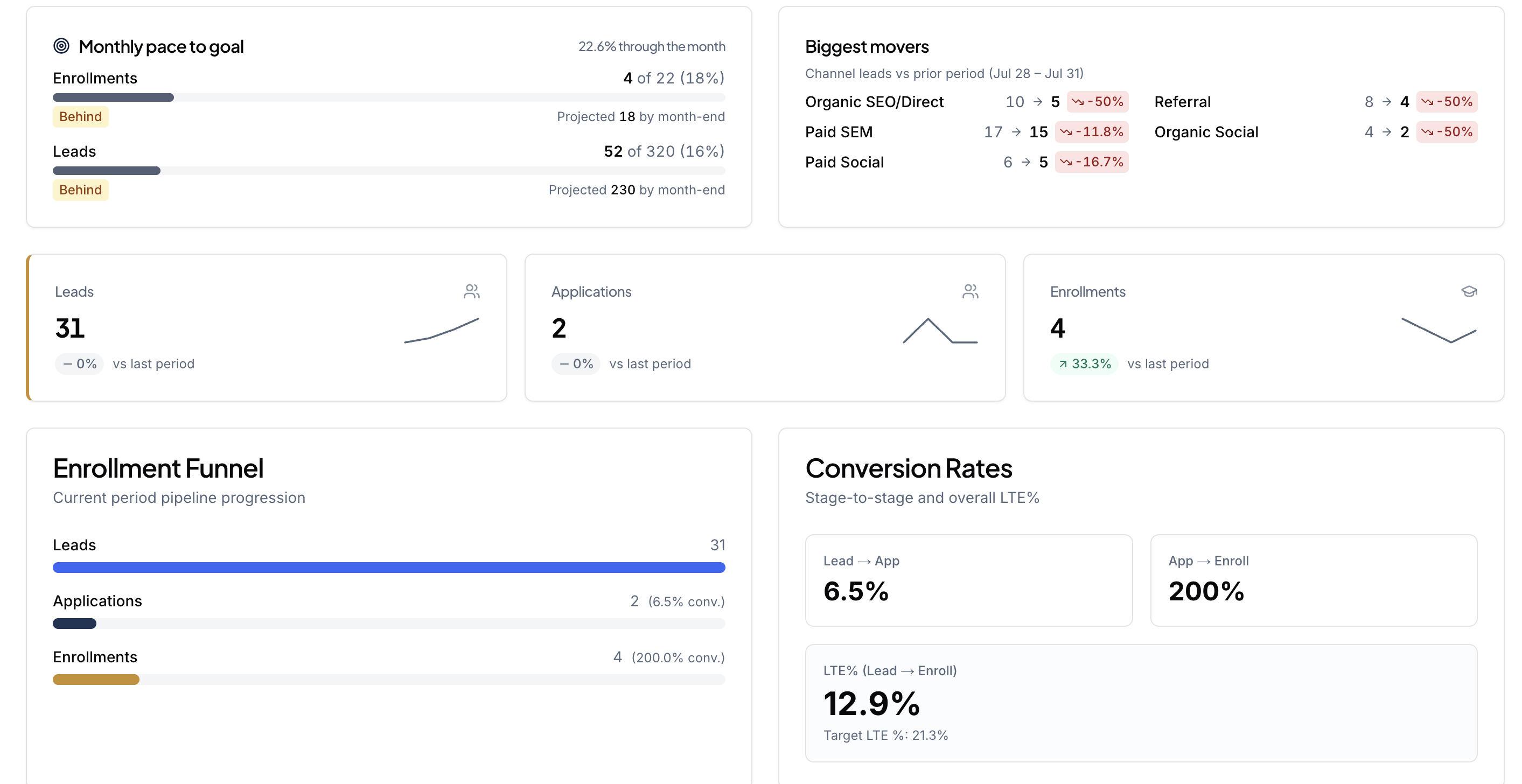
View spend, pacing, attribution, applications, and enrollments together.
Move investment toward what is working while there is still time.
Your enrollment funnel, connected
Every capability is organized around the answer an enrollment leader needs next.
Bring campaign, budget, and funnel performance into one current view.
Trace cost per inquiry, application, and enrolled student with honest source math.
Compare pacing and projected outcomes before the cycle becomes a post-mortem.
Present a defensible story with numbers that are current and easy to explain.
Built around your enrollment reality
Pennant understands the enrollment models, timelines, and accountability structures generic BI tools make you explain.
Defend seven-figure budgets across complex channel and program portfolios.
See which paid channels fill cohorts profitably across short enrollment cycles.
Track rolling cohorts forward instead of relying on incomplete snapshots.
Roll up the portfolio, then drill into any institution, program, or campaign.
What changes
Pennant turns fragmented reporting into current answers your team can explain, defend, and act on.
Five platforms, three spreadsheets, and a report already out of date.
→With PennantOne connected viewChannel performance becomes clear only after the cycle closes.
→With PennantDecisions made in-cycleLeadership receives numbers that require explanation and reconciliation.
→With PennantAnswers you can defendPrivacy by design
Pennant analyzes pseudonymous record IDs, dates, statuses, and attribution—not student names, email addresses, phone numbers, or street addresses.
See privacy and platform FAQs →Frequently asked questions
The practical questions institutions ask when connecting marketing investment to enrollment outcomes.
Ask us something else →Higher education enrollment marketing attribution connects marketing activity and spend to downstream outcomes such as inquiries, applications, deposits, and enrolled students. It shows which channels and campaigns contribute to enrollment—not merely which ones generate clicks or form fills.
Cost per enrolled student is calculated by dividing eligible marketing spend by the enrolled students attributed to those same paid sources and reporting period. Pennant keeps paid-source math aligned so organic enrollments do not artificially improve paid-channel performance.
An enrollment dashboard combines campaign spend and source data from advertising platforms with funnel stages and outcomes from the institution’s CRM. Pennant normalizes those sources into a shared enrollment model so teams can compare spend, pacing, applications, and enrollments in one view.
Yes. Pennant can analyze pseudonymous record IDs, dates, statuses, source information, and funnel outcomes without storing student names, email addresses, phone numbers, or street addresses.
Pennant is designed to refresh connected performance data throughout the day, with hourly syncs and historical backfills where supported. This helps teams act during the enrollment cycle instead of waiting for an end-of-month report.
No. Pennant is a decision layer that connects the systems your institution already uses. Your CRM and advertising platforms remain systems of record, while Pennant translates their data into a current, higher-ed-specific view of marketing and enrollment performance.
Make the next decision with confidence
See how Pennant can give your team one trustworthy view of spend, pacing, attribution, and yield.
Book a demo